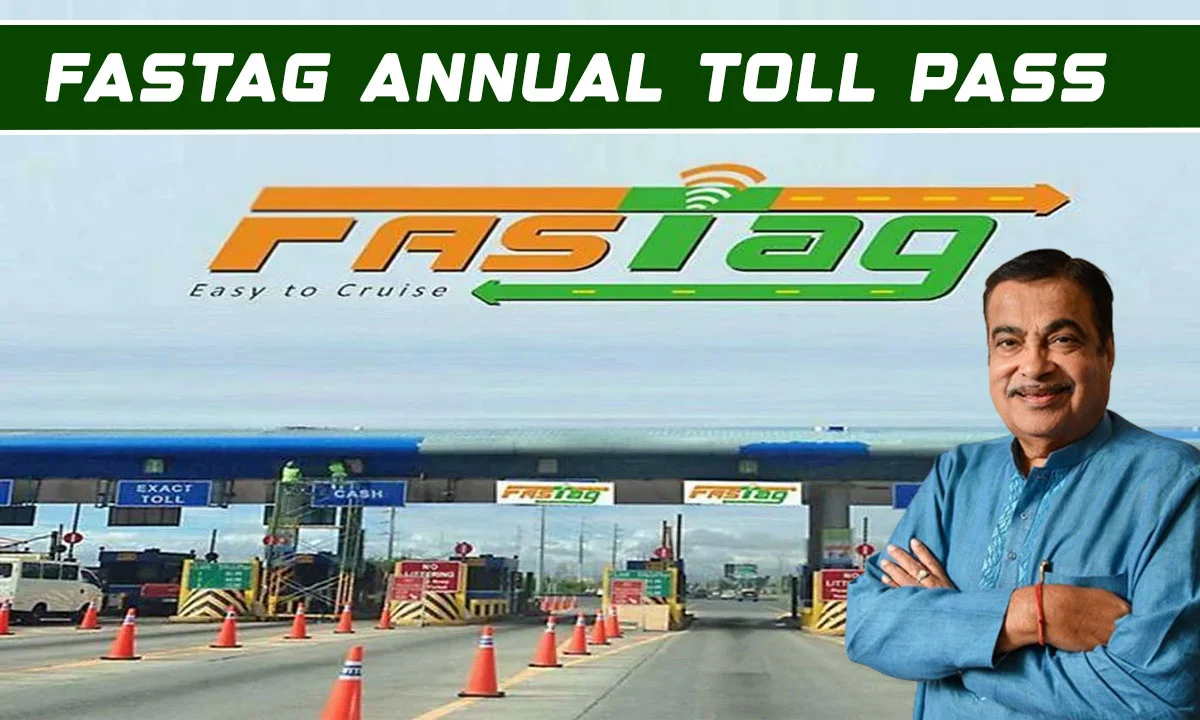

To ease travel and reduce toll expenses for private vehicle owners, the Ministry of Road Transport and Highways has launched an annual FASTag-based toll pass priced at ₹3,000. The pass will be available for all non-commercial vehicles starting August 15, 2025, and is expected to greatly relieve frequent highway users.
What’s Included?
The ₹3,000 pass allows for up to 200 toll transactions or one full year of usage, whichever comes first. Valid across all National Highway Authority of India (NHAI) toll plazas, it can be used at both open toll systems (where users pay per crossing) and closed ones (where charges are based on distance).
Unlike monthly FASTag passes limited to specific routes, this new pass offers nationwide validity, making it ideal for intercity commuters and road trippers alike.
Who Is It For?
This initiative targets private vehicle owners—cars, jeeps, and vans. Commercial vehicles are not eligible. The pass is especially beneficial for those who cross toll booths regularly and spend significantly on highway travel each year.
Key Features
- Flat ₹3,000 for the Year: No additional charges or monthly renewals.
- Easy Access: This can be purchased through the Rajmarg Yatra app, the NHAI and MoRTH websites, or authorized digital partners.
- No New FASTag Required: Existing FASTags linked to a vehicle registration number (VRN) can be used.
- Automatic Toll Tracking: Each passage is recorded via the standard FASTag RFID system.
Why It Matters
Previously, monthly passes cost around ₹340, up to ₹4,080 annually. The new flat-rate scheme saves users at least ₹1,000 a year. Union Minister Nitin Gadkari stated that in some cases, savings could go as high as ₹7,000—especially for those frequently traveling on expressways and major corridors.
The move also aligns with the government’s larger vision of reducing congestion at toll booths. According to data, the average waiting time at FASTag lanes dropped from 734 seconds in 2016 to just 47 seconds in 2023, with this new pass expected to streamline traffic even further.
What’s Next?
This rollout is seen as the first step toward more tech-driven solutions like Automatic Number Plate Recognition (ANPR) and GPS-based tolling, aimed at eventually replacing all physical toll barriers.