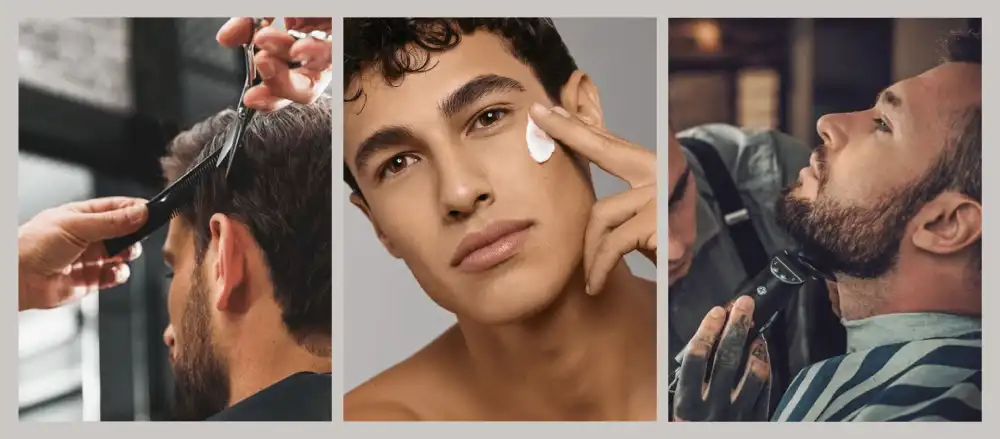

In the modern age, grooming is no longer a vanity project—it is a self-care ritual backed by science and psychology. Whether you are in the boardroom, out on a date, or just trying to level up your everyday look, good grooming habits elevate your appearance, boost confidence, and signal social competence.
Here’s a fact-packed, scientifically supported guide to grooming for men:
- Start with Skin: Science Says Clean and Hydrated Wins
Men’s skin is about 25% thicker than women’s and tends to be oilier, according to a 2012 study published in the Journal of Dermatological Science. This makes cleansing and exfoliation essential. Use a gentle cleanser twice daily and exfoliate twice weekly to remove dead skin cells and prevent clogged pores.
Moisturising is non-negotiable. A 2008 clinical review in the International Journal of Cosmetic Science found that regular moisturizing improves skin barrier function and elasticity, reducing visible signs of aging.
Pro tip: Use a moisturizer with SPF 30+ daily. UV damage is the top cause of premature aging, as the American Academy of Dermatology confirmed.
- Beard or Bare? Match Your Facial Hair to Your Face Shape
Facial hairstyles can significantly impact perceived attractiveness. A 2016 study published in Evolution and Human Behavior found that women generally rated heavy stubble as most attractive and full beards as a sign of higher parenting potential.
However, grooming isn’t one-style-fits-all. Dermatologists recommend trimming beards regularly to prevent bacterial build-up and using beard oil to maintain hair softness and skin hydration.
Science-backed tip: Clean-shaven faces are often perceived as more trustworthy in professional settings (Psychology Today, 2019).
- Hair Care Isn’t Optional: The Biology Behind Healthy Hair
Your scalp produces sebum, a natural oil that protects and moisturizes hair. Overwashing strips this oil, causing dryness, while under-washing can lead to dandruff—a condition caused by Malassezia, a yeast-like fungus. A 2014 Clinical, Cosmetic, and Investigational Dermatology review recommends washing hair 2-3 times a week with a sulfate-free shampoo.
Conditioning is key to hair fiber integrity. A 2011 Journal of Cosmetic Dermatology paper states that conditioners reduce hair fiber friction, breakage, and split ends.
Biological bonus: A healthy diet of biotin, zinc, and omega-3 fatty acids can significantly enhance hair strength and thickness (Harvard Health, 2018).
- Smell Good, Feel Better: The Psychology of Scent
Fragrance affects mood, memory, and social perception. A 2020 Cognitive Research: Principles and Implications study found that pleasant scents improved mood and cognitive performance.
Stick to subtle, long-lasting scents. Apply cologne to pulse points—wrists, neck, and behind the ears—where blood vessels are closer to the skin, helping diffuse the fragrance more effectively.
Science-backed insight: People associate certain scents with personality traits. For example, woody scents often suggest maturity and dependability (Smell & Taste Treatment and Research Foundation, 2015).
- Oral Hygiene: More Than Just a Smile
A clean, healthy mouth does more than freshen your breath. A 2017 Journal of Clinical Periodontology study found a direct link between poor oral health and increased risk of cardiovascular disease.
Brush twice daily with fluoride toothpaste and floss at least once daily. Regular tongue cleaning can also reduce bacteria that cause bad breath.
Dental science says that a white, healthy smile significantly increases perceived attractiveness and trustworthiness (American Journal of Orthodontics, 2007).
- Nail the Details: Hand and Foot Care
Neglected nails can harbor bacteria and fungi. The Centers for Disease Control and Prevention (CDC) recommends trimming nails regularly and cleaning underneath them to reduce microbial load.
Moisturize hands and feet, especially in dry climates. Cracked heels and ragged cuticles look unkempt and are vulnerable to infections.
Grooming tip: Filing nails (instead of clipping) reduces the risk of cracks and splits, says the British Journal of Dermatology.
- Eyebrows, Ears, and Everything in Between
Eyebrow grooming is often overlooked but strongly influences facial symmetry and expression, two critical factors in human attraction, according to a 2009 study from the Aesthetic Surgery Journal.
Use a small comb and scissors to trim overly bushy brows. Don’t forget ear and nose hair—quick trims go a long way in appearing well-kept.
- Dress the Part: Science-Backed Style Confidence
Clothing affects self-perception and behavior. The concept of “enclothed cognition,” explored in a 2012 study from The Journal of Experimental Social Psychology, suggests that wearing high-quality clothing improves focus, confidence, and social standing.
Tailoring matters. Regardless of fashion trends, well-fitted clothes consistently rank highest in social attractiveness evaluations.